Ever since watching “Jurassic World” with my family as a young kid, I have always expressed interest in dinosaurs and films including them.
When I saw “The Dinosaurs” would be released on Netflix, I had to watch it.
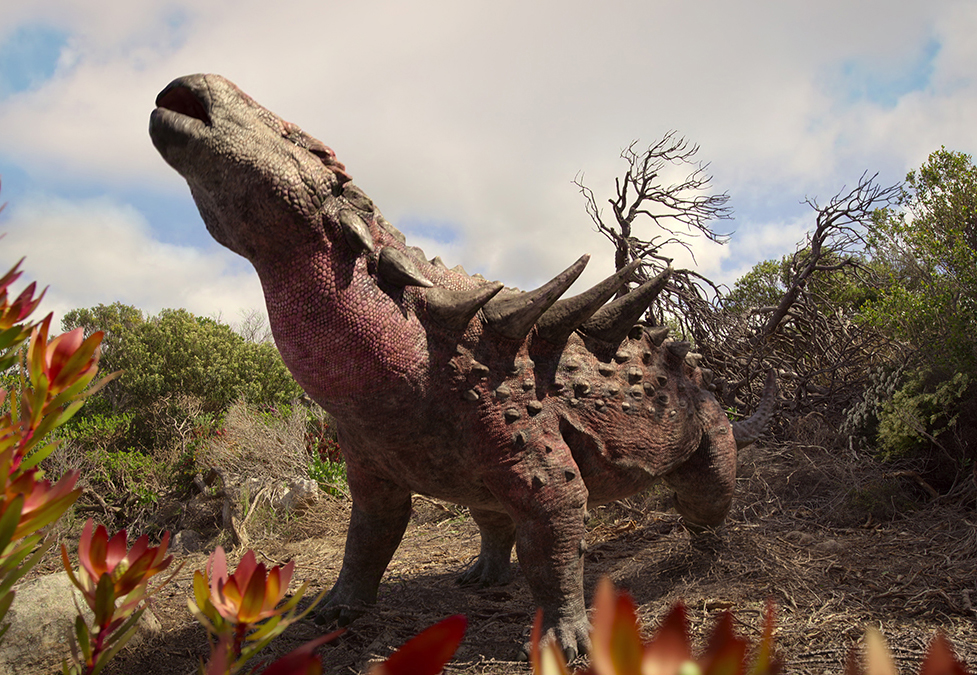
Released March 6, and produced by Steven Spielberg, “The Dinosaurs” immerses viewers into an era of dinosaurs with computer-generated imagery (CGI). The film surprised me with how realistic the animals looked, created with Industrial Light & Magic (ILM) CGI. ILM was previously used in “Jurassic Park,” which was also directed and produced by Spielberg. Although the dinosaurs are fully CGI with zero use of artificial intelligence, the landscape is filmed in real-world environments. It is impossible to tell the dinosaurs aren’t really there, making the visual display impressive.
“The Dinosaurs” begins by showing the earth before dinosaurs existed. Introduced as the ancestor of all dinosaurs, Marasuchus, attempts to survive as a small prey to give rise to future species. The four-part series continues by following different dinosaurs in a documentary-style format, showing how they survived conditions based on their role in the food chain. Compared to a real-world documentary, the CGI makes it possible to see details that wouldn’t have been able to be filmed.
The film is narrated by Morgan Freeman, who has narrated an estimated 37 documentaries, including the Oscar winning documentary “March of the Penguins.” Combined with the graphics and Freeman’s well-known, strong voice and demeanor, watching “The Dinosaurs” is calming. While watching the film, I’d forget the fascinating scenes weren’t filmed with a camera.
Not only did I learn facts about dinosaurs such as how they evolutionally link with birds, I learned about the earth’s environment during prehistoric times. It amazes me to see what technology can do for education and entertainment purposes, which makes me excited to experience what the future holds for film.