The five greatest films of the two greatest decades — filled with culture-shifting, cinematic classics, one after the other.
Notable and consistently relevant blockbusters were released in the 70s and 80s, each leaving a monumental impact on our culture and entertainment still to this day.
This period was a golden age for the box office, but it was dually an era when the “multiplex” became the heartbeat of the social scene. Whether it was the gritty, auteur-driven realism of the 70s or the neon-soaked, high-concept spectacles of the 80s, these movies dictated the rhythm of the streets.
To understand the world we live in now, one must look at the specific frames and stories that first captured the collective imagination of this transformative era.
5. “Saturday Night Fever” (1977)
John Travolta’s 1970s career peaked with his role as Tony Manero in “Saturday Night Fever,” a film that follows a working-class Brooklynite escaping his dead-end job on the disco dance floor. More than just a flashy musical with a legendary Bee Gees soundtrack, the movie is a gritty drama about escapism and identity that pushed disco into the mainstream, defining the fashion and culture of the era.
4. The Karate Kid (1984)
Released in the mid-80s, “The Karate Kid” perfectly captured the decade’s obsession with the underdog spirit through the story of Daniel LaRusso (Ralph Macchio), a bullied newcomer who learns karate from his mentor, Mr. Miyagi (Pat Morita), via mundane chores. Beyond its iconic crane kick finale, the film triggered a massive martial arts boom and shifted cinema away from 70s cynicism toward a narrative of individual triumph. By cementing the “training montage” as a cultural fixture, it provided the definitive blueprint for the modern sports drama.
3. Star Wars: A New Hope (1977)
When George Lucas unleashed “Star Wars,” he reset the DNA of global entertainment by creating a vast new galaxy that filled a void in the sci-fi landscape. The plot follows farm boy Luke Skywalker (Mark Hamill) as he leaves a desert planet to master “The Force” and destroy a planet-sized superweapon alongside a rogue pilot and a princess. By blending old-school heroics with “used-future” aesthetics and groundbreaking effects, Lucas replaced 70s cynicism with a high-stakes mythology that revolutionized movie marketing and merchandising for generations.
2. The Breakfast Club (1985)
John Hughes’ definitive 80s thesis, “The Breakfast Club,” stripped away diverse settings to focus on five students from clashing social hierarchies—the jock, brain, beauty, rebel, and outcast—forced together in Saturday detention. Departing from the era’s raunchy comedies, the film introduced genuine emotional vulnerability and a classic synth-pop soundtrack as the characters dismantled their stereotypical barriers. By its iconic fist-pump finale, Hughes had permanently redefined how Hollywood portrays the teenage soul and the high school experience.
1. Back to the Future (1985)
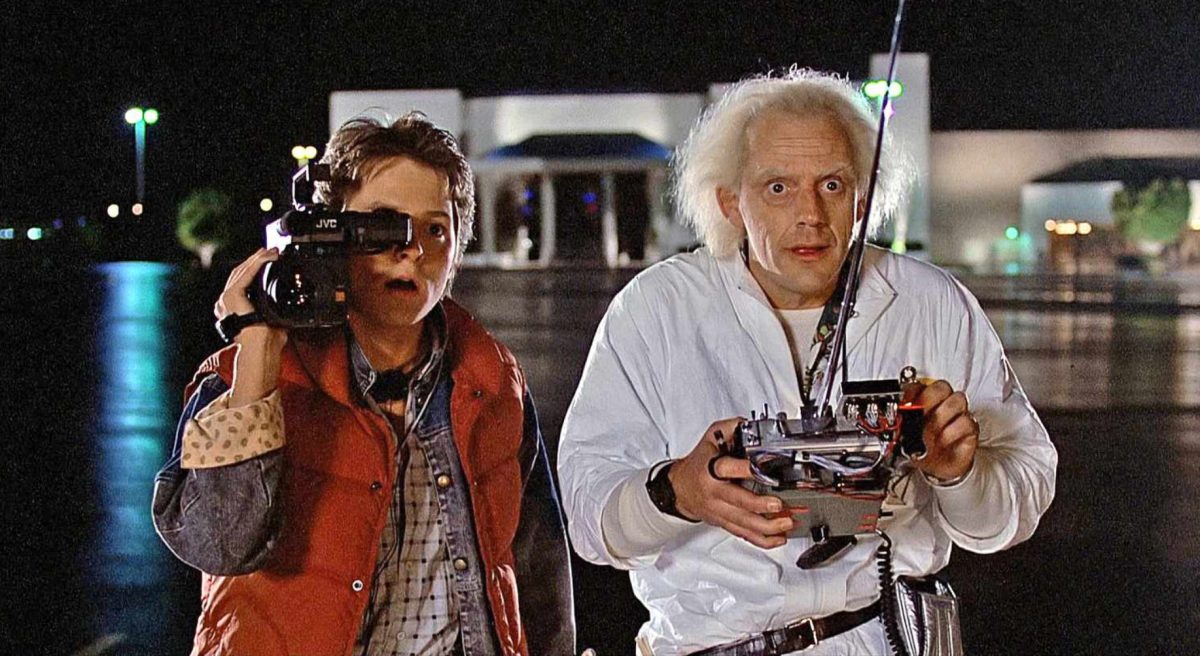
“Back to the Future” defined 80s optimism through the charmingly chaotic story of Marty McFly (Michael J. Fox), who accidentally travels to 1955 in a plutonium-powered DeLorean built by Doc Brown (Christopher Lloyd). To save his existence, Marty must ensure his teenage parents fall in love, a journey that flawlessly blends mid-century nostalgia with 80s liveliness. By mixing iconic fashion, a “Johnny B. Goode” cover, and a vision of small-town America, Robert Zemeckis created a global landmark that turned vests, skateboards, and time travel into permanent cultural staples.